 English
 Español

Quick Answer: Yes, American UL power cords are among the safest choices for electrical equipment in North America because they undergo rigorous testing under UL 817 standards, ensuring flame resistance, proper grounding, and strain relief. These cords meet strict NEMA specifications and are legally required for commercial installations in the United States and Canada.
Content
- What Makes American UL Power Cord Standards Different?
- Types of American UL Power Cords: A Complete Comparison
- UL Listed vs Non-UL Power Cords: Critical Safety Differences
- American UL Power Cord Wire Types and Specifications
- Applications and Industry-Specific Requirements
- How to Select the Right American UL Power Cord
- Frequently Asked Questions About American UL Power Cords
- What does UL listed mean on a power cord?
- Can I use a non-UL power cord in the United States?
- What is the difference between UL listed and UL recognized power cords?
- How do I identify a hospital grade American UL power cord?
- What is the maximum length for American UL power cords?
- Can American UL power cords be used with international equipment?
- What temperature ratings are available for American UL power cords?
- Are American UL power cords required for commercial buildings?
- Conclusion: Why American UL Power Cords Are Essential for Safety
What Makes American UL Power Cord Standards Different?
American UL power cords are fundamentally different from international alternatives due to their adherence to Underwriters Laboratories (UL) certification and NEMA (National Electrical Manufacturers Association) standards. While European systems rely on EN standards and IEC 60320 connectors, North American power cords must comply with UL 817—the definitive U.S. standard for cord sets and power supply cords.
The key distinction lies in the safety philosophy. UL certification focuses intensively on material and electrical safety, testing insulation quality, flame resistance, and conductor sizing to prevent fire hazards and electrical failures at the cable level. This contrasts with IEC standards that primarily address connector system safety, or NEMA standards that ensure infrastructure compatibility with North American wall outlets.
Understanding UL 817 Certification Requirements
UL 817 certification is mandatory for all American UL power cords sold in the United States. This comprehensive standard requires cords to pass multiple critical tests including the strain relief test (Section 99), also known as the abrupt pull test, which ensures connections remain secure under mechanical stress. Additionally, cords must undergo hi-pot testing to verify insulation integrity, continuity testing for proper grounding, and polarity verification to prevent electrical shock hazards.
Types of American UL Power Cords: A Complete Comparison
American UL power cords come in various configurations designed for specific applications, voltage requirements, and amperage ratings. Understanding these differences is crucial for selecting the appropriate cord for your equipment.
Standard NEMA Configurations for American UL Power Cords
The most common American UL power cord types follow NEMA standards, which define plug geometry, voltage ratings, and current capacity. These configurations ensure compatibility with North American electrical infrastructure while meeting stringent safety requirements.
| NEMA Type | Voltage/Current | Conductors | Typical Applications |
|---|---|---|---|
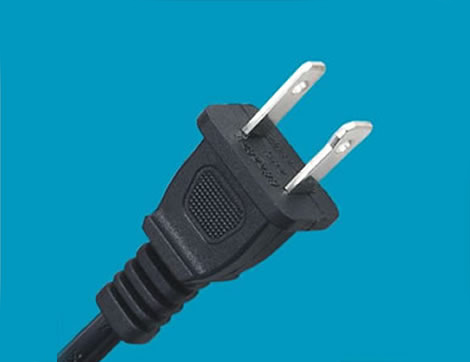
| NEMA 1-15P | 125V / 15A | 2-pin (ungrounded) | Small appliances, lamps, low-power devices |
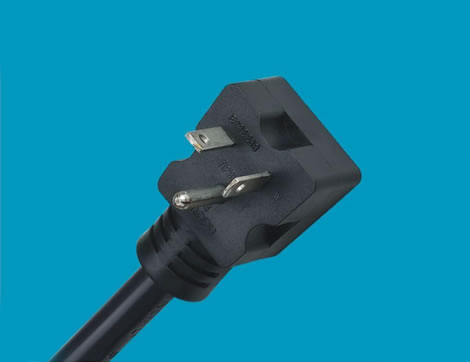
| NEMA 5-15P | 125V / 15A | 3-pin (grounded) | Office equipment, computers, monitors, printers |
| NEMA 5-20P | 125V / 20A | 3-pin (grounded) | High-power office equipment, commercial appliances |
| NEMA 6-15P | 250V / 15A | 3-pin (grounded) | Industrial equipment, heavy machinery |
| NEMA 6-20P | 250V / 20A | 3-pin (grounded) | Servers, industrial compressors, high-voltage equipment |
| NEMA L5-20P | 125V / 20A | 3-pin (locking) | Critical industrial equipment, generators |
| NEMA L6-20P | 250V / 20A | 3-pin (locking) | Data centers, server racks, critical power applications |
Hospital Grade American UL Power Cords: Enhanced Safety Standards
Hospital grade American UL power cords represent the highest safety tier within the UL certification system. These specialized cords must comply with UL 60601-1 (replacing the older UL 544 standard) for medical equipment and feature distinctive characteristics that set them apart from standard cords .
Key features of hospital grade cords include solid plug pins that resist bending, larger plug bodies to minimize shock risks, and mandatory green dot marking on the plug face indicating hospital-grade certification. These cords undergo additional skin testing on plug surfaces and must meet enhanced grounding requirements to protect patients in medical environments.
UL Listed vs Non-UL Power Cords: Critical Safety Differences
Choosing between UL listed and non-UL power cords is not merely a matter of cost—it is a critical safety decision that affects equipment protection, insurance coverage, and legal compliance. Understanding the tangible differences helps buyers make informed decisions.
Safety Assurance and Testing Rigor
UL listed American power cords undergo comprehensive testing that non-UL cords simply do not receive. UL certification requires rigorous evaluation of flame resistance, dielectric strength, conductor sizing, and mechanical durability [^5^]. The UL mark indicates that a product has met specific safety requirements and has been tested according to established industry standards, covering potential hazards including fire, electric shock, and environmental risks.
In contrast, non-UL power cords may lack proper safety testing, increasing the risk of potential hazards such as insulation failure, overheating, or electrical fires. These cords may use inferior materials, including aluminum conductors instead of copper, which do not carry current as efficiently and present higher fire risks.
| Comparison Factor | UL Listed American Power Cord | Non-UL Power Cord |
|---|---|---|
| Safety Testing | Rigorous UL 817 testing including flame resistance, strain relief, and hi-pot testing | No standardized safety testing required |
| Material Quality | High-quality copper conductors, flame-retardant insulation | May use aluminum or inferior copper, non-fire-resistant materials |
| Legal Compliance | Meets NEC (National Electrical Code) and OSHA requirements | May violate local electrical codes and regulations |
| Insurance Coverage | Recognized by insurance companies, may be required for coverage | May void insurance coverage in case of electrical incidents |
| Traceability | UL file numbers and markings for verification | No traceability or manufacturer accountability |
| Cost | Higher initial cost, lower long-term risk | Lower initial cost, potential for costly failures |
Legal and Insurance Implications
Using non-UL power cords in commercial installations can have serious legal and financial consequences. Many insurance companies require businesses to use UL listed products, as they offer a higher level of protection against potential hazards. If an electrical incident occurs and investigation reveals the use of non-UL components, insurance claims may be denied, leaving businesses liable for damages.
Furthermore, including non-UL components in UL 508A-certified panels can compromise the panel's compliance status and void certifications. This creates significant liability issues, especially in regulated environments such as healthcare, education, and government facilities.
American UL Power Cord Wire Types and Specifications
American UL power cords utilize specific wire designations that indicate their construction, voltage rating, and environmental suitability. Understanding these codes is essential for selecting the appropriate cord for your application.
Common UL Cordage Designations
UL listed cordage follows standardized naming conventions that provide immediate information about the cable's properties. These designations are derived from UL's scheme as defined in the National Electric Code (NEC) NFPA-70.
- SPT-1, SPT-2, SPT-3: Parallel cord types for light-duty applications such as lamps and small appliances. The number indicates insulation thickness, with SPT-3 being the heaviest.
- SVT: Vacuum cleaner cord, suitable for light-duty applications requiring flexibility.
- SJ, SJE, SJO, SJOW: Junior hard service cords with oil-resistant jackets, suitable for medium-duty industrial applications.
- SJT, SJTO, SJTW: Hard service cords with thermoplastic insulation, commonly used for office equipment and commercial applications.
- SO, SOW: Heavy-duty hard service cords with oil-resistant jackets for industrial environments.
- STW: Heavy-duty outdoor cord with thermoplastic insulation, suitable for construction and outdoor power tools.
- SRDT: Range and dryer cord, specifically designed for high-current appliance connections.
AWG Sizing and Current Capacity
American Wire Gauge (AWG) sizing determines the current-carrying capacity of UL power cords. Unlike European systems that use square millimeters, the AWG system uses inverse sizing where smaller numbers indicate larger conductors.
| AWG Size | Maximum Amperage | Typical Applications |
|---|---|---|
| 18 AWG | 10 Amps | Small electronics, lamps, low-power devices |
| 16 AWG | 13 Amps | Office equipment, extension cords, light appliances |
| 14 AWG | 15 Amps | Power tools, medium-duty equipment |
| 12 AWG | 20 Amps | Heavy-duty industrial equipment, air conditioners |
| 10 AWG | 30 Amps | Large appliances, industrial machinery |
| 8 AWG | 50 Amps | Electric ranges, dryers, high-power industrial equipment |
Applications and Industry-Specific Requirements
American UL power cords serve diverse applications across multiple industries, each with specific requirements for safety, durability, and performance. Selecting the appropriate cord type ensures operational reliability and regulatory compliance.
Data Centers and Information Technology
Data center applications require specialized American UL power cords that can handle high-density power distribution while ensuring continuous operation. In these environments, locking NEMA power cords (such as L5-20P and L6-20P configurations) are preferred because they prevent accidental disconnections that could cause server downtime.
For server racks and network equipment, American UL power cords with IEC C13 or C19 connectors on the equipment end are standard. These configurations combine NEMA plugs for wall connection with IEC connectors for device compatibility, providing the flexibility needed in modern data centers.
Healthcare and Medical Equipment
Medical environments demand the highest standards of electrical safety, making hospital grade American UL power cords mandatory. These cords must comply with UL 60601-1 standards for medical electrical equipment and feature enhanced grounding, low leakage current, and superior insulation to protect patients and sensitive diagnostic equipment.
Hospital grade cords are identifiable by the green dot marking on the plug face, indicating they have passed additional testing for grounding reliability and durability beyond standard UL requirements.
Industrial and Manufacturing Applications
Industrial environments require heavy-duty American UL power cords with enhanced mechanical protection. These applications often utilize twist-lock NEMA configurations (L5-20P, L6-20P, L6-30P) to ensure secure connections that cannot be accidentally dislodged by vibration or personnel movement.
Industrial cords must also resist environmental hazards including oil, chemicals, temperature extremes, and physical abrasion. Oil-resistant jackets (designated with "O" in the cord code, such as SJOW or SOW) and high-temperature insulation are essential for these demanding applications.
How to Select the Right American UL Power Cord
Selecting the appropriate American UL power cord requires systematic evaluation of your equipment's electrical requirements, environmental conditions, and regulatory obligations. Following a structured selection process ensures safety, compliance, and optimal performance.
Step-by-Step Selection Guide
Step 1: Determine Voltage and Amperage Requirements
Identify your equipment's voltage (typically 125V or 250V in North America) and current draw. Select a cord with an amperage rating at least 25% higher than your equipment's maximum draw to ensure safety margin and prevent overheating.
Step 2: Identify the Correct NEMA Configuration
Match the plug type to your wall outlet configuration. Common options include NEMA 5-15P for standard 15A outlets, NEMA 5-20P for 20A circuits, and NEMA 6-series for 250V applications. Ensure the plug blade configuration matches your receptacle exactly.
Step 3: Select Appropriate Wire Gauge
Based on the amperage requirements and cord length, choose the correct AWG size. Longer cords require heavier gauge wire to prevent voltage drop. Refer to the AWG sizing table above to ensure adequate current capacity.
Step 4: Consider Environmental Factors
Evaluate the operating environment for exposure to oil, chemicals, moisture, temperature extremes, or physical stress. Select cordage with appropriate jacket materials (such as SOOW for oil resistance or STW for outdoor use).
Step 5: Verify Connector Compatibility
If connecting to equipment with IEC inlets, ensure the cord features the correct IEC connector (C13 for computers, C19 for servers, etc.). Verify that the entire assembly—plug, cord, and connector—is UL listed as a complete unit.
Frequently Asked Questions About American UL Power Cords
What does UL listed mean on a power cord?
UL listed means the power cord has been tested by Underwriters Laboratories and meets specific safety standards for fire resistance, electrical performance, and mechanical durability. The listing indicates the cord is safe for its intended use and complies with North American safety requirements.
Can I use a non-UL power cord in the United States?
While not explicitly illegal for personal use, non-UL power cords are not recommended and may violate local electrical codes for commercial installations. Using non-UL cords can void insurance coverage, create liability issues, and pose significant safety risks including fire hazards and electrical shock.
What is the difference between UL listed and UL recognized power cords?
UL listed products are complete, stand-alone devices ready for end-use, such as a finished power cord with plugs. UL recognized products are components intended to be incorporated into larger systems. For power cords, you want the UL listed mark indicating the complete assembly is certified for direct use.
How do I identify a hospital grade American UL power cord?
Hospital grade power cords feature a distinctive green dot on the plug face, indicating compliance with UL 60601-1 medical equipment standards. These cords also have solid pins, larger plug bodies, and enhanced grounding features designed to protect patients in healthcare environments.
What is the maximum length for American UL power cords?
According to UL 817 standards, special-use cord sets with NEMA plugs and parallel-type cord have a maximum length of 6.1 meters (20 feet). For jacketed cords, the maximum length extends to 15.2 meters (50 feet). These limits ensure voltage drop remains within acceptable levels and safety is maintained.
Can American UL power cords be used with international equipment?
Yes, when properly configured. Many American UL power cords feature IEC 60320 connectors (such as C13 or C19) on the equipment end, making them compatible with international devices. However, the NEMA plug end is specifically designed for North American outlets and cannot be used directly in other countries without voltage and plug adapters.
What temperature ratings are available for American UL power cords?
Standard American UL power cords typically carry temperature ratings of 60°C, 75°C, or 105°C depending on the insulation material. High-temperature applications require cords with thermoset insulation (such as XHHW) rated up to 200°C, while standard PVC cords are typically rated at 60°C or 75°C.
Are American UL power cords required for commercial buildings?
Yes, most jurisdictions require UL listed power cords for commercial installations to comply with the National Electrical Code (NEC) and OSHA regulations. Building inspectors typically verify UL markings during electrical inspections, and non-UL cords may result in failed inspections or required remediation.
Conclusion: Why American UL Power Cords Are Essential for Safety
American UL power cords represent the gold standard for electrical safety in North America. Through rigorous testing under UL 817 standards, comprehensive material evaluation, and strict compliance with NEMA configurations, these cords provide unparalleled protection against fire hazards, electrical shock, and equipment damage.
Whether for residential electronics, commercial office equipment, critical data center infrastructure, or life-saving medical devices, selecting UL listed American power cords ensures compliance with legal requirements, satisfies insurance obligations, and—most importantly—protects lives and property. The initial investment in certified cords is minimal compared to the potential costs of electrical failures, making UL certification not just a regulatory requirement but a smart business decision.
When purchasing power cords, always verify the UL mark, check for the appropriate NEMA configuration, ensure the wire gauge matches your amperage requirements, and consider environmental factors that might require specialized jacket materials. By following these guidelines, you ensure safe, reliable power distribution for any application.